

Andhra Pradesh HC Rules: No Video Conferencing During Reconciliation in Matrimonial Disputes
 Copy Link
 Share
Share Save
Save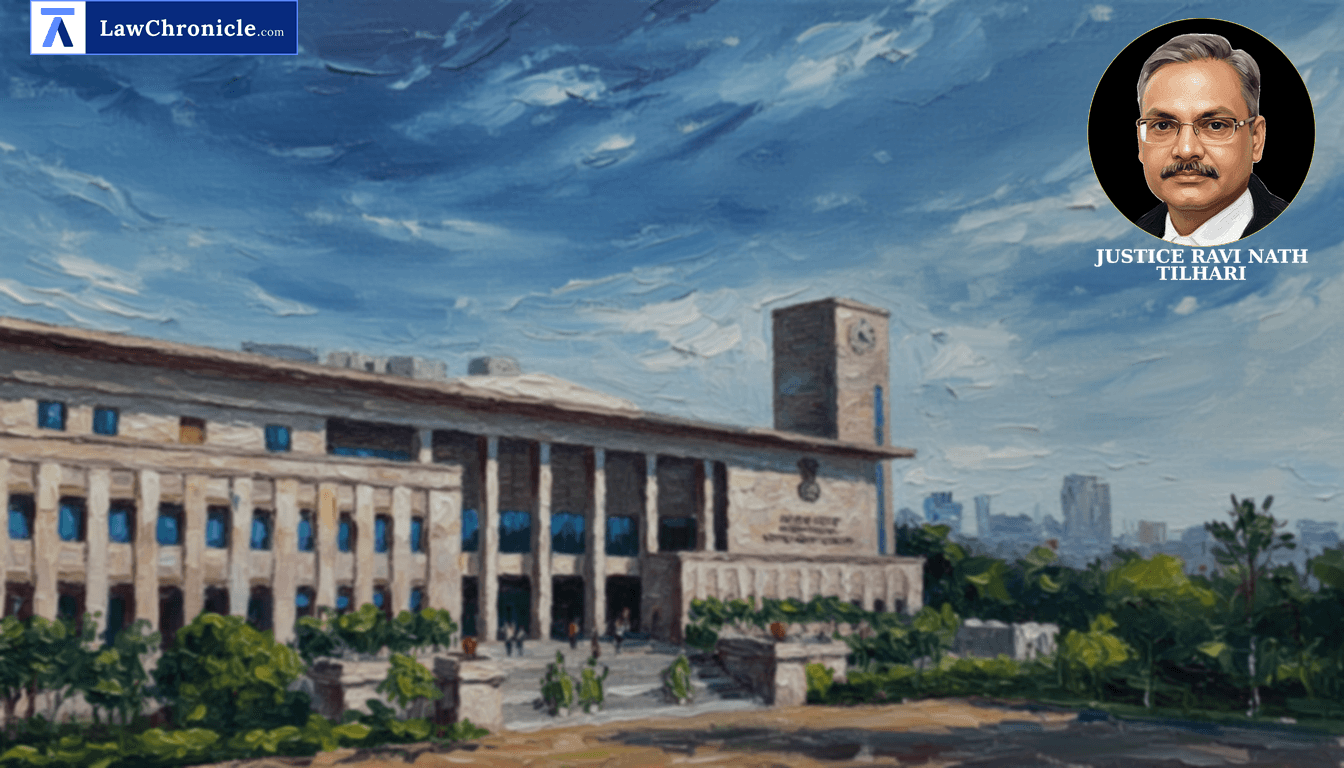
The Andhra Pradesh HC ruled that video conferencing in matrimonial proceedings is permissible before a Family Court or a Civil Court only after reconciliation efforts have failed.
A bench of Justice Ravi Nath Tilhari heard a civil revision under Article 227 of the Constitution of India, 1950 challenging a trial court order that refused permission for the husband, resident abroad, to participate in reconciliation proceedings in a matrimonial petition through video conferencing.
The High Court dismissed the revision petition and held that video conferencing in matrimonial proceedings was permissible only after reconciliation efforts had failed; the court held that the Andhra Pradesh High Court Rules for Video Conferencing, 2023 could not be read so as to override the binding pronouncements of the Supreme Court.
The Court, in its reasoning, observed: "In view of the aforesaid discussion, this Court holds, on points of determination ‘A’ and ‘B’, that video conferencing is permissible in matrimonial proceedings, whether before the Family Court or the Civil Court, after reconciliation fails. In other words, at the stage of reconciliation, until it fails, video conferencing is not permissible for such purpose. The judgment in Santhini (supra) applies with full force in the State of Andhra Pradesh as well and is not inapplicable, as contended by the petitioner’s counsel, on account of the Andhra Pradesh High Court “Rules for Video Conferencing for Courts, 2023". The court also quoted the judgment to note that "Videoconferencing may create a dent in the process of settlement," and emphasized that Section 11 of the Family Courts Act, 1984 and Section 22 of the Hindu Marriage Act, 1955 mandate confidentiality and in‑camera proceedings in matrimonial matters.
Background:
The petitioner, represented by a power of attorney holder, had sought permission to appear by Zoom/Skype from Texas for reconciliation in H.M.O.P. No.35 of 2023; the trial court refused the prayer after noting the petitioner had earlier indicated possible travel and therefore found no justification for virtual attendance. The High Court considered competing submissions: the petitioner relied on the High Court’s Rules for Video Conferencing, 2023 and earlier co‑ordinate decisions allowing remote participation; the State and the trial court order were defended on the basis that the Supreme Court’s majority holding in Santhini Vs. Vijaya Venkatesh required in‑person or, at best, videoconferencing only after reconciliation had failed and upon joint application or consent memoranda.
In reaching its conclusion, the High Court examined and applied a host of precedents. It treated Santhini Vs. Vijaya Venkatesh as the governing Supreme Court authority and noted that Mohammad Razik Shaik vs. Sufia Sultana Bano Mohammad had applied that majority view at the High Court level; the court considered emergency exceptions in Anjali Brahmawar Chauhan vs. Navin Chauhan ( "(2021) 16 SCC 501": 2021 CaseBase(SC) 1108) (COVID context) but held that such directions did not alter the general rule. On the question whether rules framed by the High Court under Article 227 of the Constitution of India, 1950 could displace Supreme Court law, the court relied on constitutional and precedent principles discussed in Tirath Ram Rajindra Nath, v. State of U.P. and another and M/s. Hiralal Rattanlal etc., etc., v. State of U.P. and another etc. ( "(1973) 1 SCC 216": 1972 CaseBase(SC) 550) to observe that a legislature may remove the basis of a judicial decision by valid legislation but that High Court rules under Article 227 cannot override statutory or apex court law. The judgment cited Satchidananda Misra v. State of Orissa and others ( "(2004) 8 SCC 599": 2004 CaseBase(SC) 58), Prithvi Cotton Mills Ltd. v. Broach Borough Municipality and State of Rajasthan and others v. Sharwan Kumar Kumawat and others on validating statutes and the limits of subordinate rule‑making, and relied on P.Radhakrishnan v. High Court of Judicature at Madras reptd. By Us Registrar, High Court, Madras and another and Keshavlal Parbhuas Chokshi Firm and others v. Manubhai I Vyas to interpret the proviso to Article 227 and the need for rules not to be inconsistent with existing law.
On the meaning of "law" within procedural rules, the court followed the reasoning in Bhargavi Constructions and another v. Kothakapu Muthyam Reddy and others ( "(2018) 13 SCC 480": 2017 CaseBase(SC) 617), which had surveyed High Court decisions in Virendra Kumar Dixit V. State of UP, Hermes Marines Ltd. v. Capeshore Maritime Partners FZC, Shahid S. Sarkar v. Mangala Shivdas Dandekar and Mira Sinha v. State of Jharkhand to hold that judicial precedents form part of the law for procedural bars. The court also cited classic constitutional authority in Shri Ram Krishna Dalmia v. Shri Justice S.R. Tendolkar and others and preferred the interpretive approach urged in Government of Andhra Pradesh and Others v. P. Laxmi Devi ( "(2008) 4 SCC 720": 2008 CaseBase(SC) 1238) to uphold validity where two views are possible. The earlier two‑Judge authority in Krishna Veni Nagam v. Harish Nagam ( "(2017) 4 SCC 150": 2017 CaseBase(SC) 447) was noted as subject to the limited exception carved out by Santhini Vs. Vijaya Venkatesh.
Ultimately the High Court applied the Supreme Court’s framework and denied interference with the trial court order, holding that video conferencing could not be directed at the reconciliation stage and that the trial court had acted in consonance with the law declared by the apex court; no interim directions were issued and the revision petition was dismissed with no costs. The Court clarified that the High Court Rules, 2023 were procedural and could regulate the manner of video hearings where such hearings were otherwise permissible, but could not be read to permit video conferencing in a manner inconsistent with the statutory mandate and apex court precedent.
Case Details:
Case No.: C.R.P.No.311 of 2026
NeutralCitation: 2026:APHC:18331
Case Title: Bheemisetti Suryanarayana v. Bheemisetti Mrudula Naga Bhavani
Appearances:
For the Petitioner(s): Sri B.Abhay Siddanth Mootha
For the Respondent(s): ---
Source: 2026 CaseBase(AP) 167
 Breaking News