


Supreme Court: Re‑litigation After Abandonment Is Abuse
 Copy Link
 Share
Share Save
Save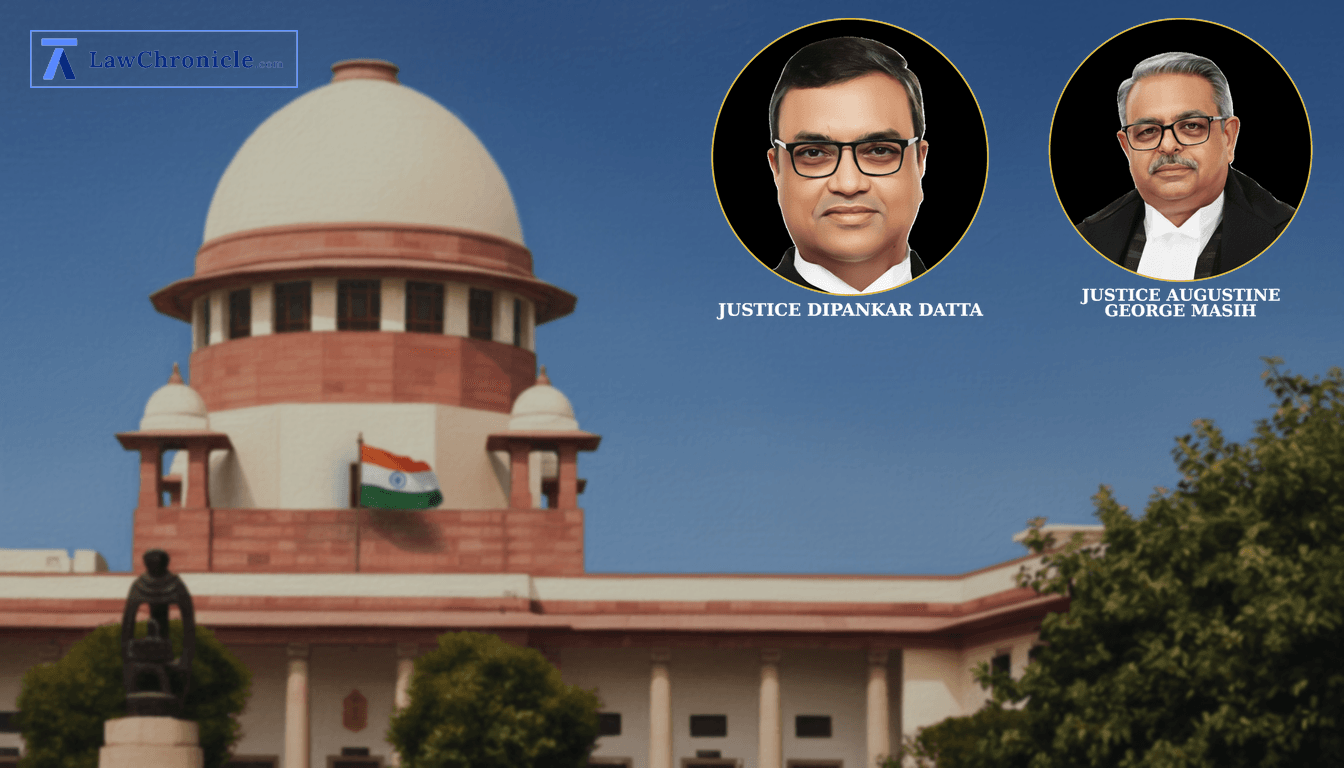
A bench of Justices Dipankar Datta and Augustine George Masih heard a civil appeal challenging the High Court of Andhra Pradesh’s dismissal at the admission stage of a second appeal against an appellate court order which set aside the executing court’s rejection of objections under Order XXI, Rules 99–101, CPC. The appeal concerned whether decree-holders could execute a decree for specific performance against respondents who claimed independent title by registered sale deeds and whether earlier suits dismissed for default operated to preclude the respondents’ title or otherwise disentitled the decree-holders from execution.
The Court held that dismissal of a suit for default did not ordinarily constitute res judicata under Section 11, CPC, but that the appellants’ conduct in instituting suits challenging the respondents’ title and then allowing them to be dismissed for default, and also permitting restoration applications to fail, amounted to an abuse of the process of the court. The Court agreed with the appellate court’s ultimate conclusion that the appellants could not be permitted to reap the benefit of the decree in execution against the respondents, although it rejected the view that res judicata strictly applied. The Court, in its reasoning, observed: "While a dismissal for default may not constitute res judicata in the strict sense under Section 11, CPC, the conduct of the appellants in abandoning the earlier suits, after having raised a positive case therein, attracts the broader principles akin to nemo debet bis vexari, si constet curiae quod sit pro una et eadem causa. A litigant who set the ball rolling for a decision on an issue later elects not to pursue it cannot be permitted to revive the same dispute at a later stage, particularly in collateral or execution proceedings, and that too by seeking to obtain an order behind the back of the contestants." The Court further observed that "In the absence of any exceptional circumstance, the appellants stand precluded to reap the benefit of the decree through execution proceedings having chosen not to pursue O.S. Nos. 892 and 893 of 1990."
Background
The dispute arose from a suit for specific performance filed by the appellants in 1988 in respect of a portion of immovable property in Himayat Nagar, Hyderabad. The trial court decreed specific performance in October 1998, and the appellants pursued execution; a sale deed was executed through the court in January 2001, and warrants for delivery of possession were issued. Respondents 1–3, who were not parties to the specific performance suit, filed objections under Order XXI, Rules 99–101, asserting independent title under registered sale deeds dated July 1990, purportedly executed by a purchaser claiming through an alleged oral gift and a general power of attorney. The executing court conducted a detailed enquiry and dismissed the objection petition, finding that the respondents had not established an independent title. The appellate court allowed the respondents’ appeal and directed that the appellants must pursue a separate suit to establish rights against them. The High Court dismissed the second appeal at the admission stage, and the matter reached the Supreme Court.
The appellants argued that the sales were hit by lis pendens (Section 52, Transfer of Property Act) and that the executing court had the jurisdiction under Order XXI to determine title-disputes without directing a separate suit, relying on precedents including Shreenath v. Rajesh. The respondents relied on the fact that the appellants had themselves instituted two suits (O.S. Nos. 892 and 893 of 1990) to challenge the sale deeds and had allowed those suits and restoration applications to be dismissed for default, invoking principles of finality, estoppel and abuse of process.
The Supreme Court examined the distinction between res judicata under Section 11 and broader doctrines preventing relitigation, including the maxim nemo debet bis vexari and principles in K.K. Modi, Sarguja Transport Service and other authorities. It concluded that although dismissal for default did not attract res judicata on merits, the appellants’ repeated non-prosecution and selective litigation amounted to an abuse of process and disentitled them from executing the decree against the respondents. The appeal was dismissed and the impugned judgment was upheld for reasons different from those assigned by the High Court. Parties were directed to bear their own costs.
Case Details:
Case No.: Civil Appeal No. 2609 of 2013
NeutralCitation: 2026 INSC 292
Case Title: Sharada Sanghi & Ors. v. Asha Agarwal & Ors.
Appearances:
For the Petitioner(s): Mr. Huzefa Ahmadi, Senior Counsel
For the Respondent(s): Mr. Raval, Senior Counsel
Source: 2026 CaseBase(SC) 259
 Breaking News