


SC: Conversion Bars SC/ST Act Status, Case Quashed
 Copy Link
 Share
Share Save
Save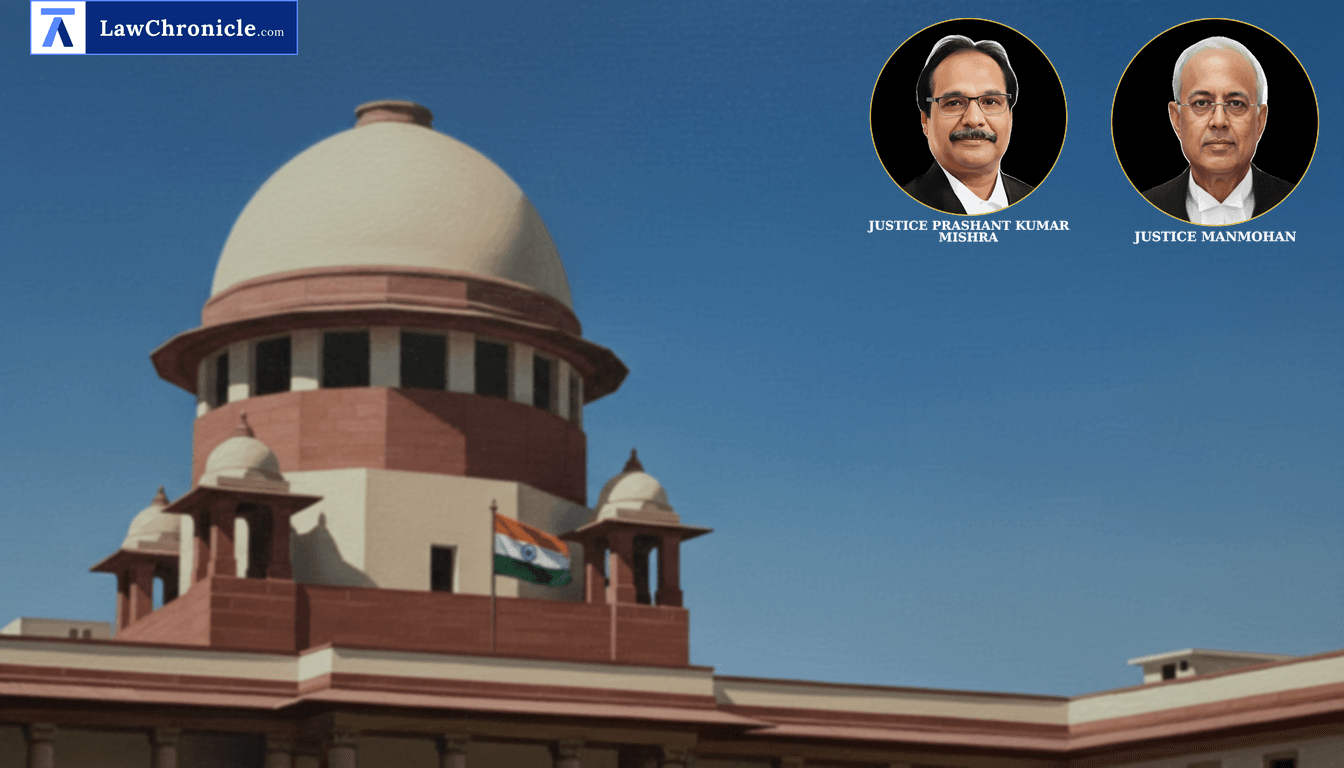
A bench of Justice Prashant Kumar Mishra and Justice Manmohan heard an appeal against the Andhra Pradesh High Court’s order quashing criminal proceedings arising out of FIR No. 08 of 2021 under the SC/ST (Prevention of Atrocities) Act and related IPC provisions. The appeal challenged the High Court’s decision to set aside charges against six accused persons and raised the broader question whether a person who openly professed Christianity could claim protection under the SC/ST Act.
The Court held that the appellant had ceased to be a member of a Scheduled Caste by virtue of publicly professing Christianity and that the foundational requirement for invoking the SC/ST Act therefore failed. It found that statutory protection under the SC/ST Act could not be claimed by a person who did not satisfy Clause 3 of the Constitution (Scheduled Castes) Order, 1950. The Court also agreed with the High Court’s assessment that the evidence for offences under Sections 341, 506 and 323 read with Section 34 IPC was insufficient and that continuation of criminal proceedings against respondent nos. 2 to 7 would amount to an abuse of the process of law. The Court, in its reasoning, observed: "No person who professes a religion other than Hindu, Sikh or Buddhist shall be deemed to be a member of a Scheduled Caste. This bar under Clause 3 of the Constitution (Scheduled Castes) Order, 1950 is categorical and absolute. Conversion to any religion not specified in Clause 3 results in immediate and complete loss of Scheduled Caste status from the moment of conversion regardless of birth." The judgment further noted that "the offences registered under the SC/ST Act against respondent nos. 2 to 7 ... cannot be sustained" once the appellant's status was held to have been extinguished.
Background
The appellant, who was born into the Madiga community (listed as a Scheduled Caste in the Presidential Order), had for about ten years conducted Sunday prayer meetings as a Pastor and held office in a pastors’ fellowship. He alleged two incidents of assault and caste-based abuse in January 2021 and lodged a complaint leading to FIR No. 08 of 2021 charging several persons under the SC/ST Act and IPC. The police filed a charge-sheet and the matter proceeded before the Special Court under the SC/ST Act. The accused moved the High Court under Section 482 Cr.P.C., contending that the appellant’s open profession and practice of Christianity disentitled him from Scheduled Caste status under Clause 3 of the Presidential Order. The High Court quashed the proceedings against respondent nos. 2 to 7, finding that the appellant professed Christianity and that witness statements and medical evidence did not support the prosecution’s narrative.
On appeal the Supreme Court reviewed the constitutional and statutory framework, considered precedents including Punjabrao v. D.P. Meshram, Guntur Medical College v. Y. Mohan Rao and later authorities, and examined G.O. Ms. No.341 (Andhra Pradesh) relied upon by the appellant. The Court observed that the State order extended only non‑statutory concessions to converts and could not override the Presidential Order or grant statutory benefits under central enactments. The Court also emphasised established tests for claiming caste status and held that mere possession of a caste certificate did not suffice where Clause 3 applied. On the criminal evidence, the Court endorsed the High Court’s finding that independent corroboration was lacking and that the material did not disclose commission of the alleged IPC offences against the named accused. The appeal failed and the conviction proceedings (as against respondent nos. 2 to 7) remained quashed; no further interim directions were issued.
Case Details:
Case No.: Criminal Appeal No. 1580 of 2026 (Arising out of S.L.P. (Criminal) No. 9231/2025)
NeutralCitation: 2026 INSC 283
Case Title: Chinthada Anand v. State of Andhra Pradesh and Others
Source: 2026 CaseBase(SC) 250
 Breaking News